
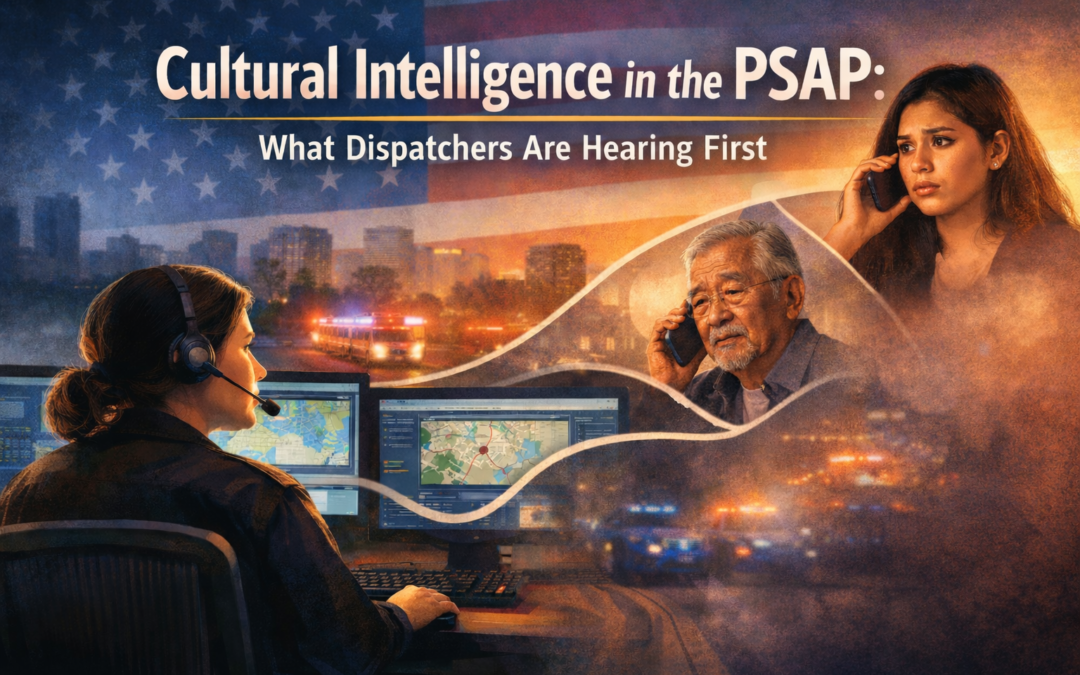
Anyone who has spent time on a console knows that broader changes in society tend to show up in the call stream long before they appear in reports or headlines.
Dispatchers hear those shifts firsthand. Different languages. Different relationships to authority. Different expectations about what happens when someone calls for help. These differences rarely arrive in obvious ways. More often, they surface quietly, call by call, shaped by circumstance and urgency.
That reality is part of daily work in today’s PSAPs, and it is where cultural intelligence has become increasingly relevant.
Cultural Intelligence as a Working Skill
In a dispatch environment, cultural intelligence is not a separate initiative or a theoretical framework. It is a working skill that many dispatchers already rely on, often without naming it.
It shows up when a dispatcher adjusts the pace of questioning because a caller is struggling to process information. It appears when someone takes a moment to explain why a location is needed instead of repeating the same question. It is present when silence, emotion, or hesitation is recognized as stress rather than resistance.
Cultural intelligence supports adaptability while allowing dispatchers to maintain control of the call, which is something experienced professionals understand intuitively.
What This Looks Like on the Line
Dispatchers do not need reminders that no two calls are the same. The differences are familiar.
A caller with limited English proficiency may be trying to describe a medical emergency using unfamiliar terminology while navigating fear and urgency. Information may arrive out of order or require confirmation. The dispatcher is balancing clarity, efficiency, and the decision of when to bring in interpretation support.
Another caller may hesitate to provide identifying information or a precise location. Many dispatchers recognize that hesitation does not always signal noncompliance. In some cases, it reflects past experiences or uncertainty about what will follow the call. A brief explanation of process is often enough to reduce tension and move forward.
There are also calls where emotional expression does not align with expectations. Some callers sound frantic. Others sound detached or unusually calm. Dispatchers know that tone alone is an unreliable indicator of credibility or severity, and cultural intelligence reinforces that understanding.
Notes for Dispatchers New to the Console
For those newer to the profession, cultural intelligence is not something to master all at once. Much of it develops through experience, reflection, and exposure to a wide range of calls.
A few early reminders can help.
New dispatchers often focus on asking the right questions in the right order, which is important. Over time, it becomes just as important to notice how a caller is responding. Hesitation, silence, or confusion usually signal stress or processing, not defiance.
Explaining why a question matters can be just as effective as asking it again. A brief sentence about how information helps responders can change the direction of a call.
It is also helpful to remember that tone is not a reliable measure of urgency. Some callers will sound calm in serious situations, while others may sound distressed when the issue is minor. Trust the information, not the volume.
Finally, learning when to pause is part of learning when to lead. A steady pace and clear structure often do more to move a call forward than rushing to the next question.
These skills take time. Asking for feedback, listening to experienced dispatchers, and reviewing calls with curiosity rather than self-criticism all support growth.
Technology and the Changing Shape of Communication
Tools like text-to-911 have changed how information arrives at the console. For many dispatchers, this shift is already familiar.
Text-based communication has improved access for callers who cannot safely speak or who rely on written communication. At the same time, it removes cues that dispatchers have traditionally relied on, such as tone, pacing, and immediacy. Messages can be brief, fragmented, or delayed, requiring more deliberate questioning and confirmation.
In these situations, dispatcher judgment becomes even more central. Cultural intelligence helps guide how questions are framed and how gaps in information are interpreted, especially when what is missing may be as important as what is provided.
Reinforcing What Dispatchers Already Do Well
Dispatchers operate under constant cognitive and emotional pressure, and cultural intelligence is not about adding another expectation to the role. Instead, it is about recognizing and reinforcing skills that are already part of effective call handling.
Agencies that integrate cultural intelligence successfully tend to do so through existing practices. Reviewing real calls during QA, talking through communication challenges without blame, and sharing strategies that worked in difficult situations all contribute to consistency and confidence. These conversations are most effective when they reflect real experiences rather than abstract scenarios.
The focus remains on steady improvement, not perfection.
Why This Still Matters
Even experienced dispatchers will acknowledge that communication challenges can affect how quickly information is gathered and how effectively resources are deployed. They also influence whether callers feel safe reaching out again when they need help.
Dispatchers are often the first human point of contact during a crisis, and that interaction shapes how individuals experience public safety. Cultural intelligence supports that interaction by helping dispatchers meet callers where they are, without compromising operational priorities or professionalism.
Every call is different, and every dispatcher knows that adaptability is part of the job. Cultural intelligence helps ensure that those differences do not interfere with the shared goal of delivering help as clearly, efficiently, and safely as possible.